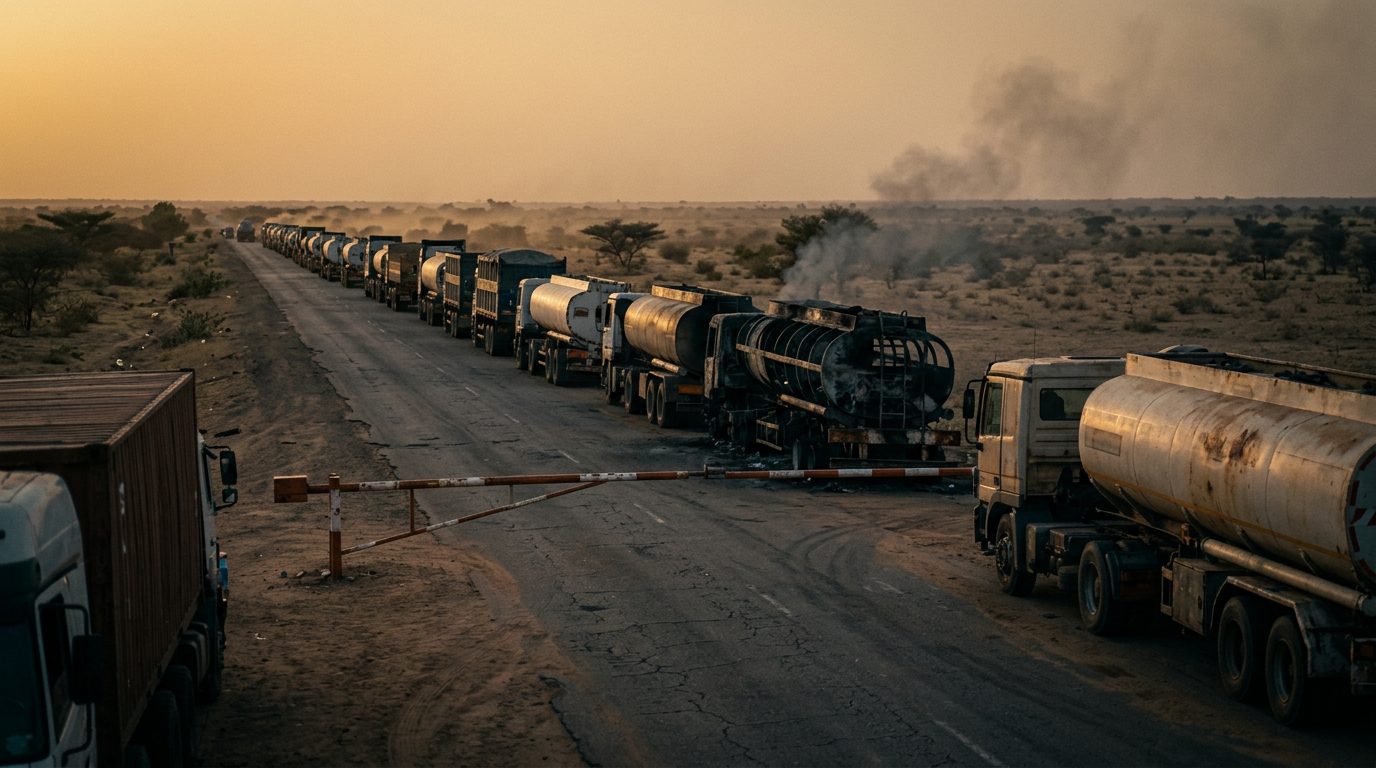
Mali's capital is being strangled by its fuel supply, not by fighting in its streets. The al-Qaeda-aligned JNIM declared a full blockade on Bamako on 28 April, extending a campaign against fuel convoys that began in September 2025. Since then, open-source reporting counts more than 300 fuel tankers destroyed on the roads in from Senegal and Côte d'Ivoire.
The vulnerability is structural. Mali is landlocked and imports roughly 95% of its fuel by road, so cutting the tanker routes chokes the capital without a shot fired in it. Schools and universities closed for two weeks last autumn; power generation has been rationed, and satellite imagery shows Bamako visibly darker at night. Fuel is prioritised for military and government use.
The junta has kept the capital breathing with escorted convoys — more than a thousand tankers pushed through under military protection since late October — and appointed a general to run what local media call the fuel war. It has not broken the blockade. The convoy runs are themselves targets: an early-February attack near the Senegalese border killed at least 15.
For operators, this is the reference case for a modern logistics siege, and the read-across is the point. Where fuel, power or a single supply corridor is the dependency, an adversary does not need to enter the city to take it hostage. In-country, treat road movement outside Bamako as high-risk, plan fuel as a hard constraint rather than a given, and note that the US and UK advised their nationals to leave months ago.