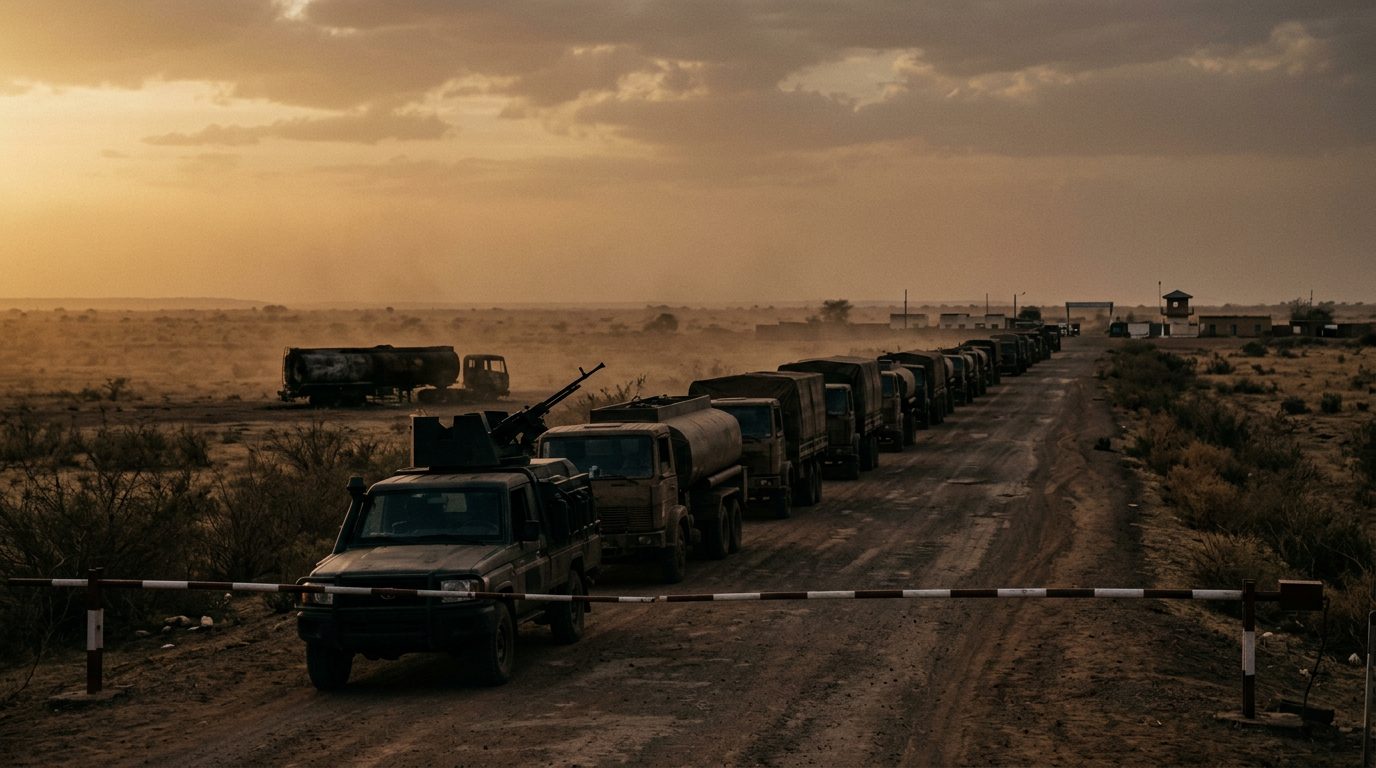
Mali's capital is being kept supplied one guarded convoy at a time. JNIM's blockade on fuel moving into Bamako, which the group has enforced by burning tankers on the approach roads from Senegal, Cote d'Ivoire and Guinea, is still in place. The Malian military is escorting fuel and cargo into the city in large columns rather than letting traffic run normally. In the week of 23 to 29 June the government moved 940 supply trucks between Kayes and Bamako under escort, starting with 540 and adding 400 that had been stranded near Diema by the threat of attack.
The picture is not one of steady relief. JNIM and the allied FLA renewed offensives in early July after a lull, and open-source reporting describes any easing as intermittent and unreliable. The blockade's reach is regional as well as national. Analysts tracking the trade losses put the Port of Dakar down around 2.6 million dollars a month over the autumn as Mali-bound flows dried up.
For operators the takeaway is structural. Fuel is the single point of failure for any movement plan in and around Bamako. Convoys move, but only under military escort and on the military's timetable, and a corridor that is open today can close behind a burnt-out tanker tomorrow.
Treat any road movement as permissive but reversible. Carry your own fuel margin rather than relying on resupply, tie movement windows to the escorted convoy schedule where one runs, and keep an air option and a hold-in-place plan ready for the day the road shuts.