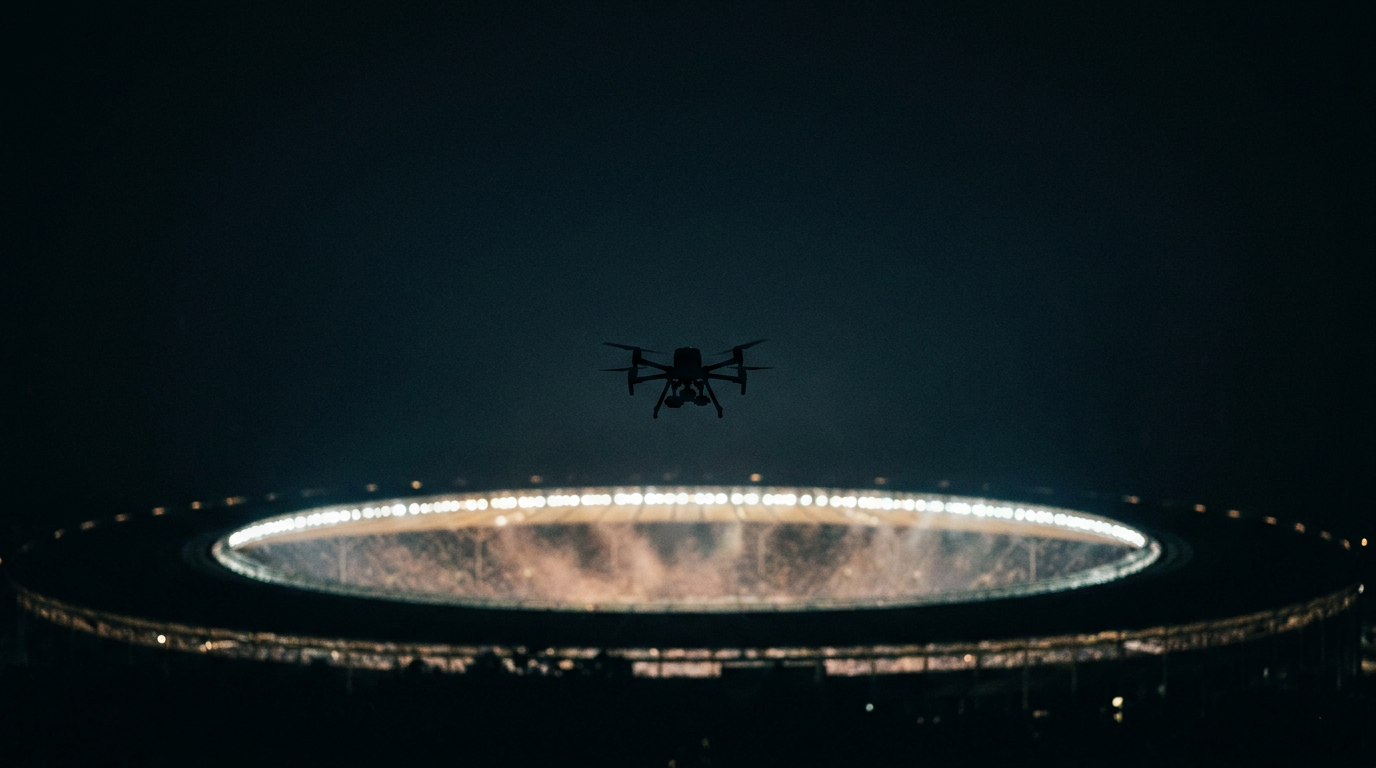
US authorities have charged five men over an alleged plot to attack "UFC Freedom 250" at the White House on Sunday 15 June 2026. Per the open-source reporting, the group intended to stage a "demonstration" on the north side, deploy "drones laden with unspecified explosive devices which would detonate over the north side of the UFC arena", and then position armed members "as snipers and additional shooters" to hit evacuees and "high value targets" — described as wealthy attendees and politicians — along the southern escape routes.
The plot was disrupted before it matured. The FBI became aware of the threat on **10 June 2026** after the mother of a 19-year-old suspect contacted local police about his firearms purchases and online contacts expressing "ultra-religious and anti-government sentiments". Weapons and ammunition were seized. Crucially, **no drones were actually recovered**, and reporting indicates the drone element remained in "discussion-and-research phases".
**Operator implication.** Set aside how far this one got. The design is the point, and it is a clean statement of the current soft-target threat model:
1. **An initiating event to break the cordon** — explosives over a crowd to trigger a panicked, uncontrolled evacuation. 2. **A second layer pre-positioned on the predictable escape routes** — the kill zone is not the venue, it is where people run to.
That inverts the standard plan. Evacuation routes, muster points and the ground immediately outside the secured perimeter need the same threat treatment as the venue itself. Counter-UAS coverage answers the first layer; route and over-watch discipline answers the second. The aerial-plus-ground layered concept is now demonstrably in the amateur planning space, sourced from open research, not just state actors. Plan evacuations as contested ground.