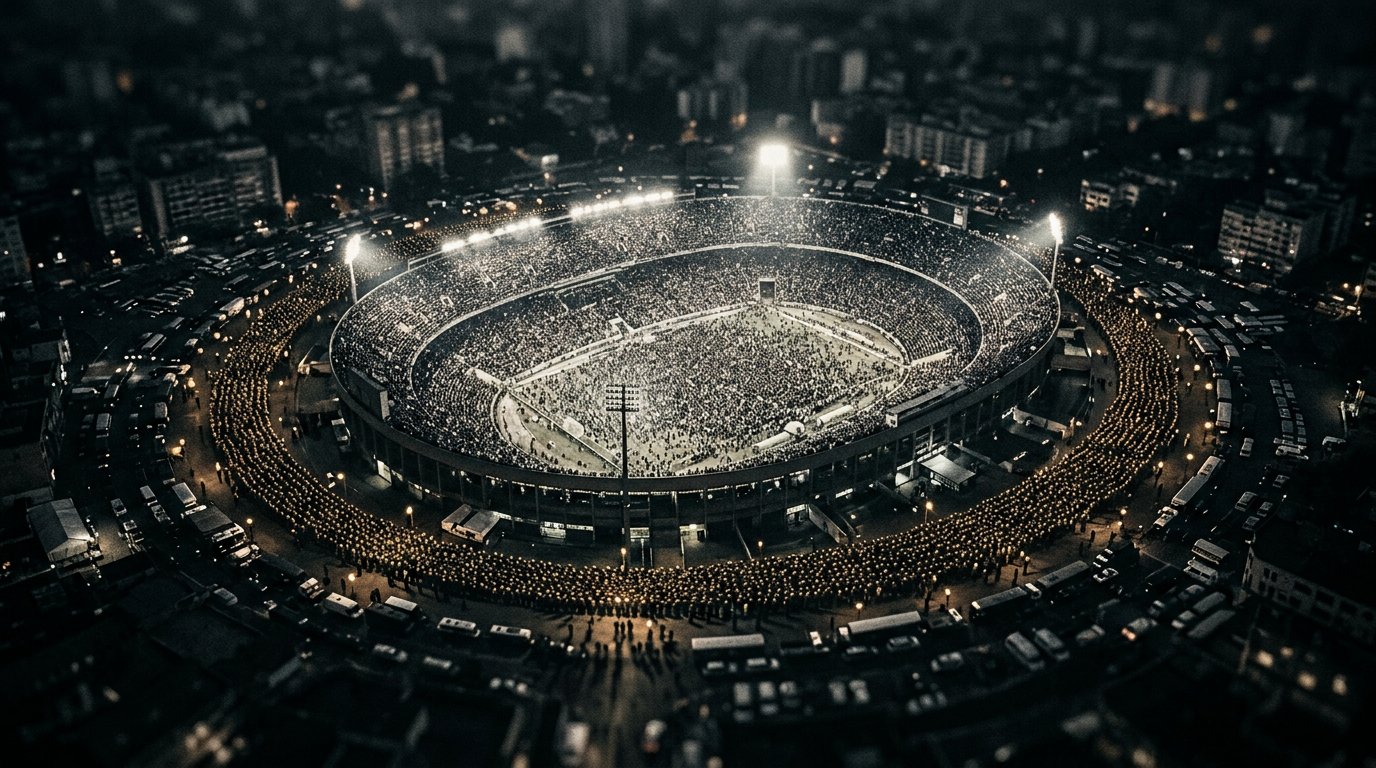
The 2026 World Cup opened on 11 June at the Estadio Azteca in Mexico City, with Mexico beating South Africa 2-0 in front of thousands of spectators. The match was the first fixture of a 39-day tournament running to 19 July across 16 venues in Mexico, the United States and Canada — the largest sporting-event security operation ever mounted.
Mexico's share of that operation is Plan Kukulkan, presented by President Claudia Sheinbaum in March. Per the BBC's reporting, it puts just over 99,000 personnel across the three Mexican host cities — Mexico City, Guadalajara and Monterrey — and their surrounding tourist areas: roughly 20,000 military, 55,000 police, plus private security contractors. The package includes around 2,500 military and civilian vehicles, 24 aircraft, anti-drone systems and explosives-detection dogs.
Day one delivered a useful signal about where the friction actually is. Students and activists, including groups from the National Autonomous University of Mexico, marched on the stadium arguing tournament spending should go to social priorities. Per Euronews reporting, protesters tried to move barricades and push through police lines on the access routes; some threw stones and debris, and officers in riot gear held the cordons. The perimeter held and the match proceeded as scheduled.
The operator read: the opening-day threat that actually materialised was public-order disruption on venue approaches, not an attack inside the perimeter. For teams moving principals to matches over the next six weeks, the choke points are the approach routes — plan primary and alternate ingress well clear of announced protest activity, build time for hard traffic management around stadiums, and treat the final kilometre as the highest-friction phase of the move. Expect the same pattern, with local variations, as the tournament rolls through 16 host cities.