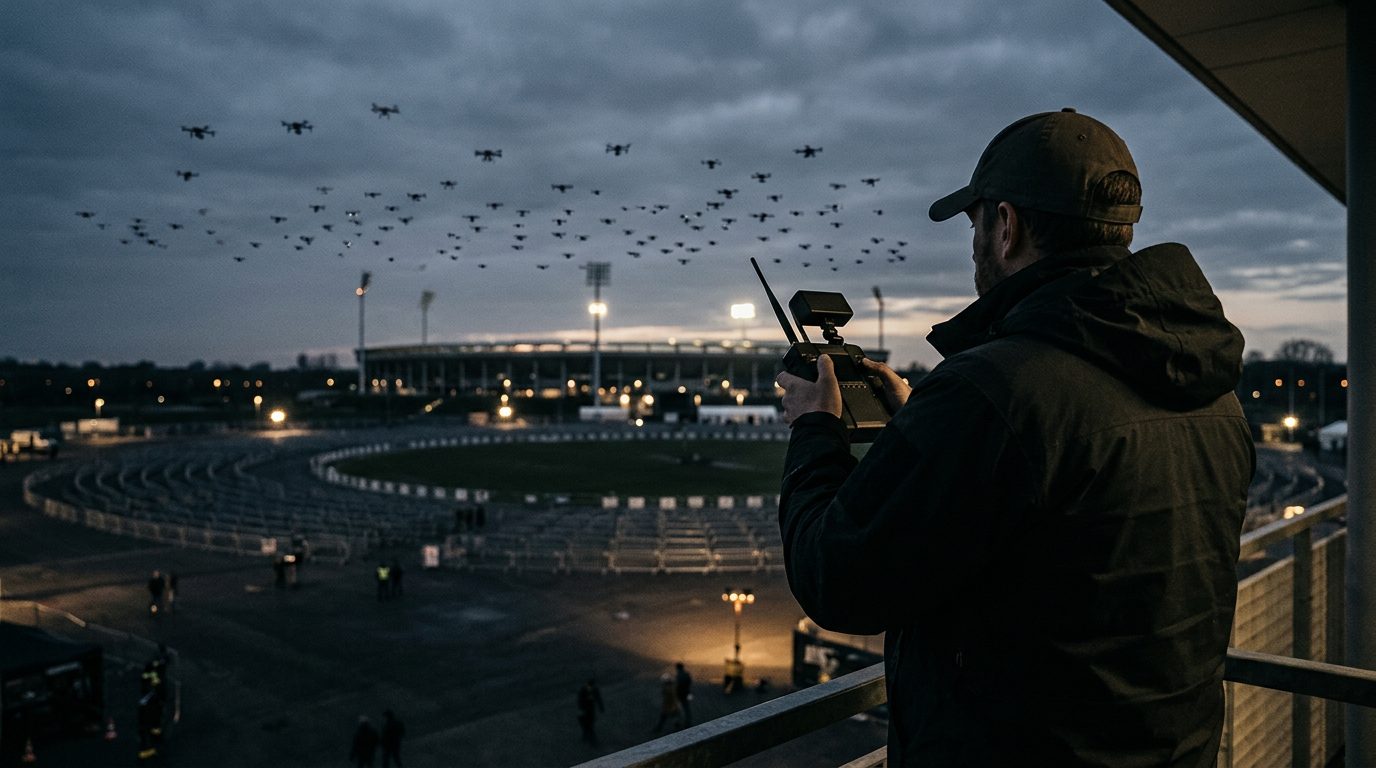
The counter-drone numbers from the World Cup are now concrete. US agencies have detected 1,139 drones near tournament stadiums and sites, seized over 600 since the tournament opened on 11 June, and brought more than 300 down without force using electronic countermeasures (GV Wire; DroneDJ). Nearly all were ordinary hobbyist aircraft, not sophisticated custom platforms; the White House task-force coordinator, Andrew Giuliani, said authorities had responded to hundreds of drone incursions while play continued (DroneDJ).
The scale is the point. A stadium generates a constant background of casual, unaware drone flights, and the signal you actually care about is buried in that noise. Every one of the 78 US matches has counter-drone cover, and one fan fest per host city is covered too (ABC News).
The authority line has not moved. Mitigation — jamming, downing, seizing — sits with federal agencies and, under recent legislation, local police forces trained by the FBI (ABC News). Private security has no such power. Running a jammer or a take-down system without authority is itself an offence.
So for a close-protection or venue team working the grey space — hotels, fan zones, transport nodes, the walk-up — the job is unchanged and worth stating plainly. Detect and characterise, report fast to the agency that owns the airspace, and integrate your picture with theirs. Detect, report, integrate — not defeat. The value you add is early warning and a clean hand-off, not a countermeasure you are not allowed to fire.