The 2026 World Cup, running 11 June to 19 July across the United States, Canada and Mexico, has become the largest concentrated soft-target security effort the security world has seen in years, and the way it is being run is setting a template that will not be packed away when the final whistle goes.
The scale. The tournament spans 16 host cities and 48 teams, with roughly six million spectators expected to travel. More than 400 law enforcement agencies are working alongside federal bodies and private security firms across stadiums, fan festivals, team base camps and hotels. DHS and FEMA have committed $365 million to event security technology, split as $115 million for drone-related programmes and $250 million in counter-drone grants to host states.
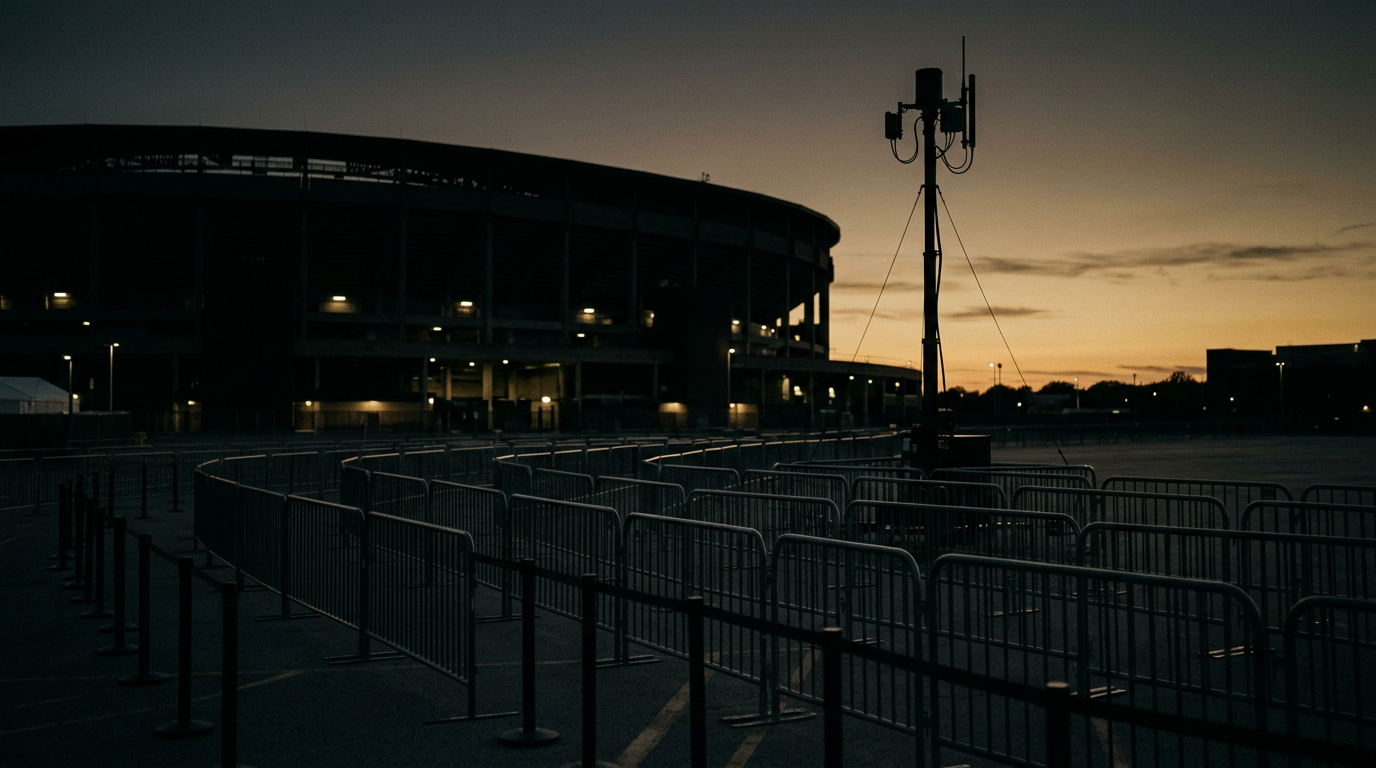
What is being fielded. Counter-drone is front and centre. DHS has contracted Fortem Technologies to deploy kinetic net-capture interceptors — DroneHunter craft with NetGuns, TrueView radar for detection, and the SkyDome command system — across US host venues. Stadiums including Gillette in Boston, Hard Rock in Miami and Mercedes-Benz in Atlanta are rolling out AI-powered facial recognition for entry and payment. Contractors are fusing drone imagery and tracking into single command platforms and building digital twins of venues for live crowd monitoring.
The operator implication. Two things matter beyond the tournament. First, this is a working demonstration of the layered model now expected at major events: airspace defence, biometric access control, and a fused command picture, run jointly across public and private teams. If you work events or venues, that is the standard your clients will increasingly ask about. Second, analysts and civil-liberties groups note the surveillance build-out is not temporary; the infrastructure and the inter-agency habits tend to persist after the event. Counter-drone tools also raise a known side effect, with experts warning some mitigation systems can intercept nearby radio communications. For protective teams moving principals through host cities this summer, plan for airspace restrictions, dense surveillance coverage, biometric checkpoints and heavy crowd-control footprints as the baseline, not the exception.