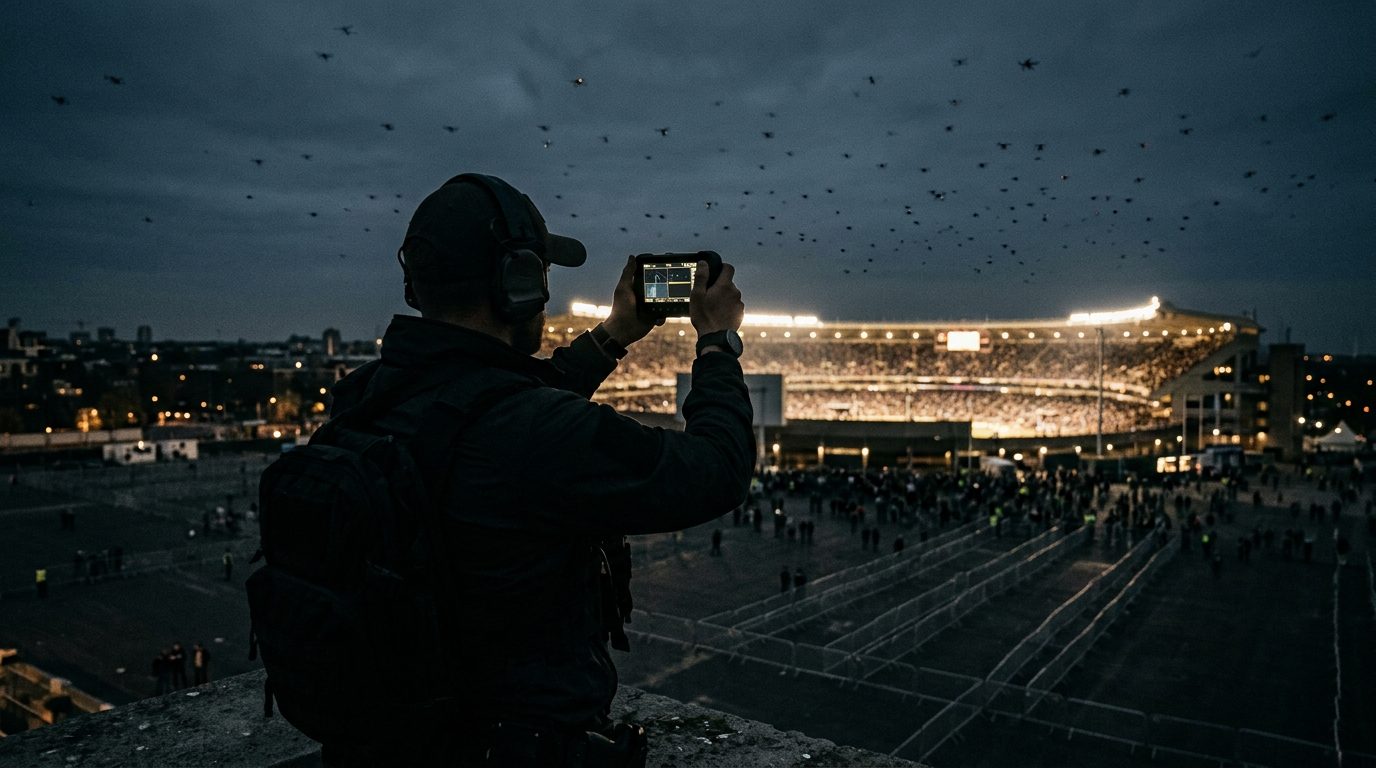
The drone number at the World Cup keeps climbing. US agencies have now seized more than 600 drones near tournament venues across all eleven US host cities since the tournament opened on 11 June (GV Wire, per Reuters), up from around 500 a week earlier and drawn from more than 1,139 drones detected in restricted airspace; over 300 have been brought down without force, pointing to heavy use of electronic counter-drone systems (DroneDJ). Nearly all are hobbyist aircraft straying into closed airspace rather than hostile platforms.
On match days, all aircraft including drones are barred within three nautical miles and up to 3,000 feet of the stadiums unless air traffic control clears them (GV Wire). Enforcement is running through federal teams and, increasingly, local police: the NYPD alone seized or mitigated 97 drones across New York and New Jersey from 13 June (DroneDJ). A new interim rule that took effect on 1 July, enabled by the 2026 National Defense Authorization Act, broadened the counter-UAS mission to state, local, tribal, territorial and corrections agencies working under federally authorised programmes (DroneDJ).
The operator point has not changed with the widened authority. That rule extends mitigation to more government bodies — not to private security. A contracted team at a venue, fan festival or principal movement can detect, report and integrate with the agencies that hold the mitigation authority, but it cannot lawfully defeat a drone itself. The job is airspace awareness and fast hand-off, not engagement. Build the counter-UAS annex around whose authority you are operating under, and rehearse the report chain before the event, not during it.