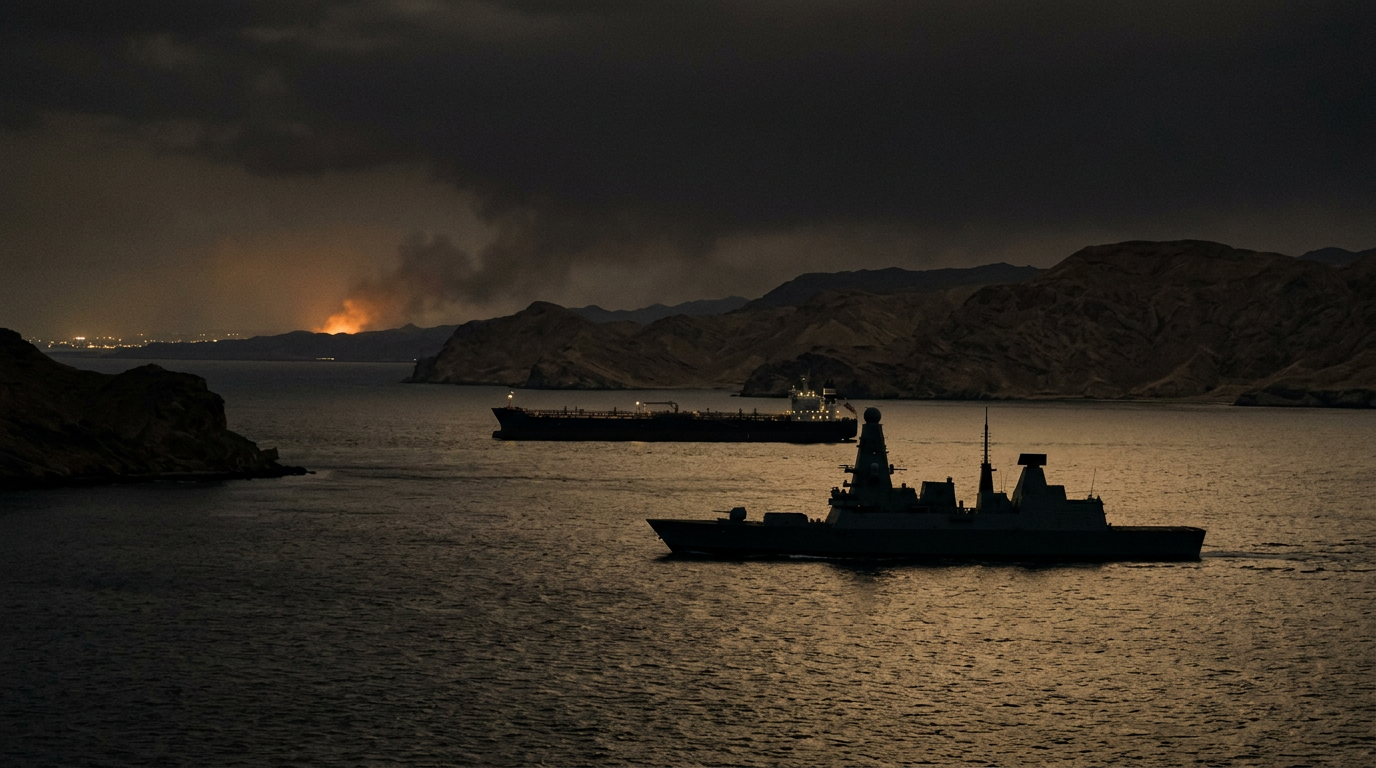
The de-confliction line from the Islamabad memorandum is gone. Open-source reporting indicates the 17 June 60-day ceasefire frayed within ten days, and by the weekend the US and Iran were trading strikes around the Strait of Hormuz.
**What broke it.** Drones hit two ships near the strait: the Singapore-flagged container ship *Ever Lovely* on 27 June, then the Panama-flagged tanker *Kiku*, carrying more than two million barrels of crude, early on 28 June. Washington called the attacks a truce violation. US Central Command struck around ten Iranian military targets in and near the strait — reporting names sites at Sirik, Bandar-e Lengeh and Qeshm Island. Open-source reporting points to missile, drone and coastal-radar targets; it does not confirm strikes on nuclear sites.
**Iran's response.** On 29 June the Revolutionary Guard fired ballistic missiles and drones at the US Ali Al Salem airbase in Kuwait and the US Fifth Fleet at Bahrain. Each side blames the other for breaking the deal.
**The talks have stalled.** Iran did not attend technical talks scheduled at the weekend, citing unmet conditions, and says it is assessing whether Washington has met its commitments. The 60-day road map floated ten days ago is now in doubt, not on track. Lebanon — the deal's pledge to end the fighting "on all fronts" — remains the underlying dispute and the likeliest trigger for the next round.
**For operators:** treat the Gulf as a live maritime and basing-risk environment again, not a recovering one. Route principal transits via the southern Omani lane where escort is available, build slack into Gulf travel for closures and holding delays, and assume Hormuz disruption. Watch Lebanon as the trigger. Anyone with Gulf or regional exposure should hold contingency routing and confirm evacuation options before any movement.