The marine war-risk market has repriced the Strait of Hormuz, and the numbers are now punitive.
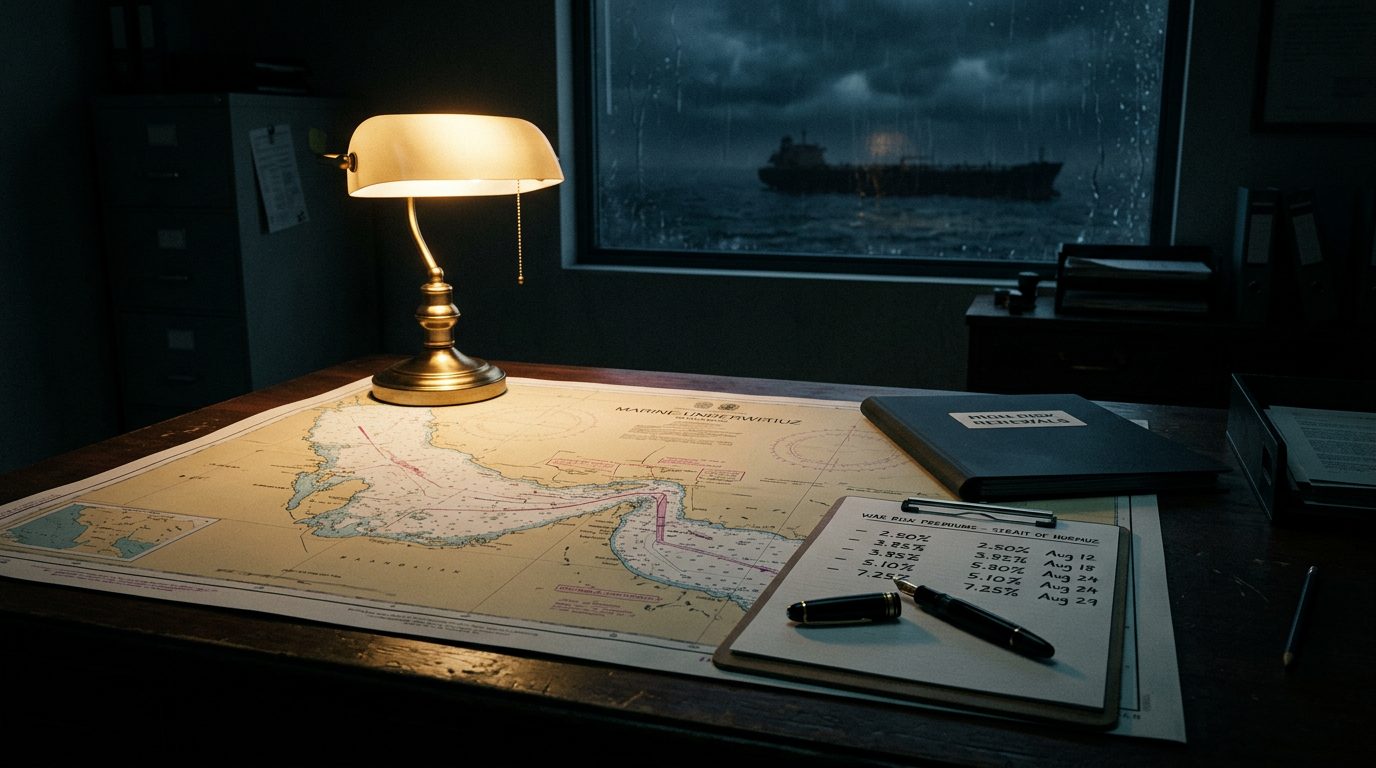
Hull war-risk premiums for a Hormuz transit are running at roughly two to six percent of a vessel's value, according to Marsh's Marcus Baker — up from a fraction of a percent before the conflict, though down from a peak near ten percent earlier in the crisis. One underwriter's blunt read: someone will cover you, but probably at five percent at the least.
The structure sharpens the cost. War-risk cover is typically written on a seven-day basis and reviewed every 24 to 48 hours, so even a slight increase in the rate translates to additional daily costs of hundreds of thousands of dollars. After the ceasefire broke down and three ships were attacked, some war underwriters told clients to pause Hormuz voyages altogether while they reassessed terms.
The counter-intuitive signal is that demand for cover is now falling. That is not confidence returning — it is the opposite. Owners are cancelling planned transits and holding vessels back, so they are asking for fewer quotes. The market has moved from expensive to barely functional.
For operators, the insurance line is a live risk indicator, not just an accounting item. A principal's yacht movement, a maritime security contract or a crewing plan built around a Gulf transit can be halted by an underwriter's decision as fast as by a naval one. Confirm war-risk cover is actually in place and current before committing to any Hormuz-linked task, and treat a withdrawal of cover as a stop signal in its own right.