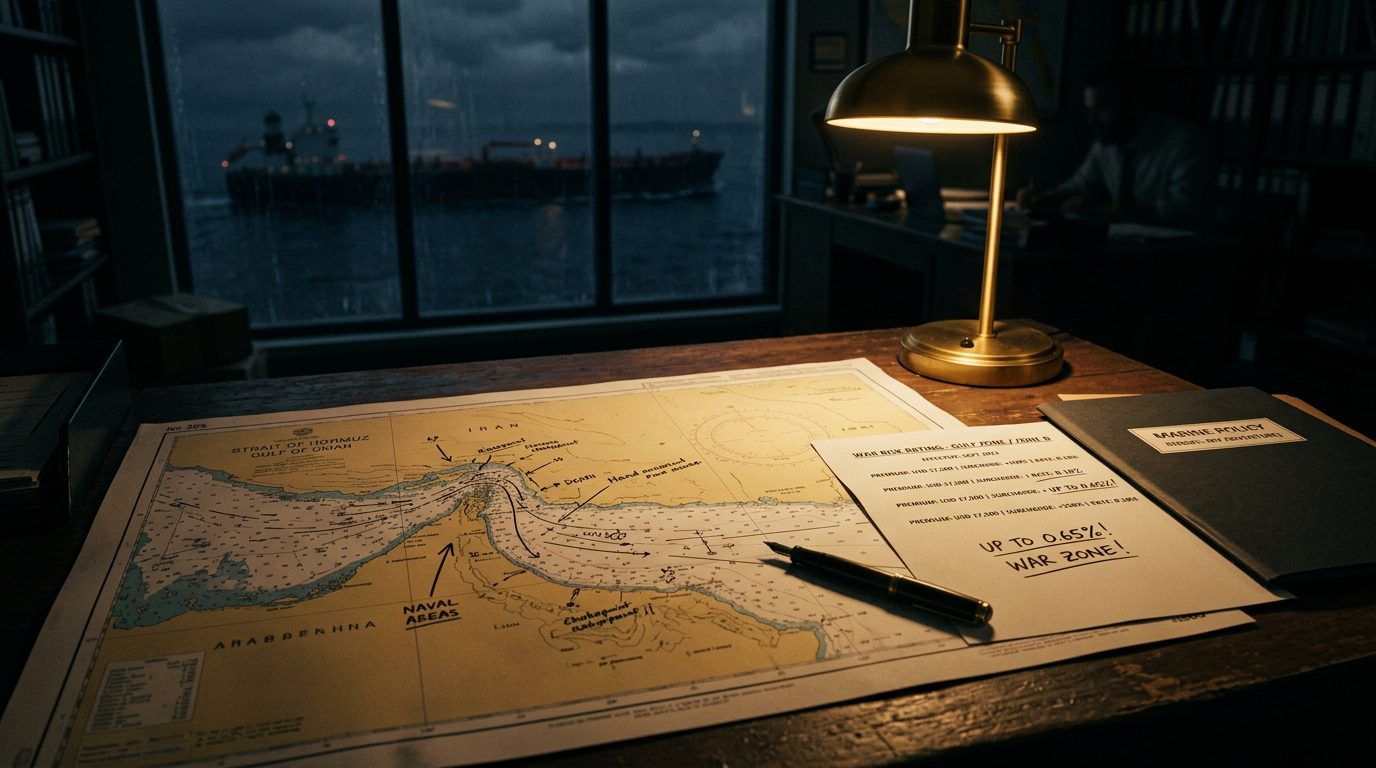
The cost of insuring a ship through the Strait of Hormuz has reset upward, and it is now priced like a war zone.
Hull war-risk premiums are running at roughly 5% of a vessel's value for a single Hormuz transit — a level brokers describe as the new market norm. On a large tanker that runs into millions of dollars for one passage, on top of normal operating cost.
The trajectory tells the story. Premiums spiked as high as 10% earlier in the conflict, eased to around 2% when the US and Iran signed their memorandum of understanding in June, then hardened again after a run of tanker attacks this month. "War-risk rates have moved as risk has moved," Neil Roberts of the Lloyd's Market Association told Xinhua.
The International Maritime Organization has advised ships to avoid transiting the strait until the safety and security of crews can be assured. With Monday's missile strike on two UAE tankers and Washington's move to reinstate its blockade, underwriters face a market that can reprice — or withdraw cover entirely — inside a day.
For security providers, the insurance line is a live planning input, not back-office detail. War-risk pricing and the breach clauses around it shape whether a client's voyage goes ahead, what escort or hardening is mandated, and how quickly a transit must clear the strait. Expect owners to demand documented security measures to hold cover, and expect some charterers to route around the Gulf entirely while the premium sits at war-zone levels.