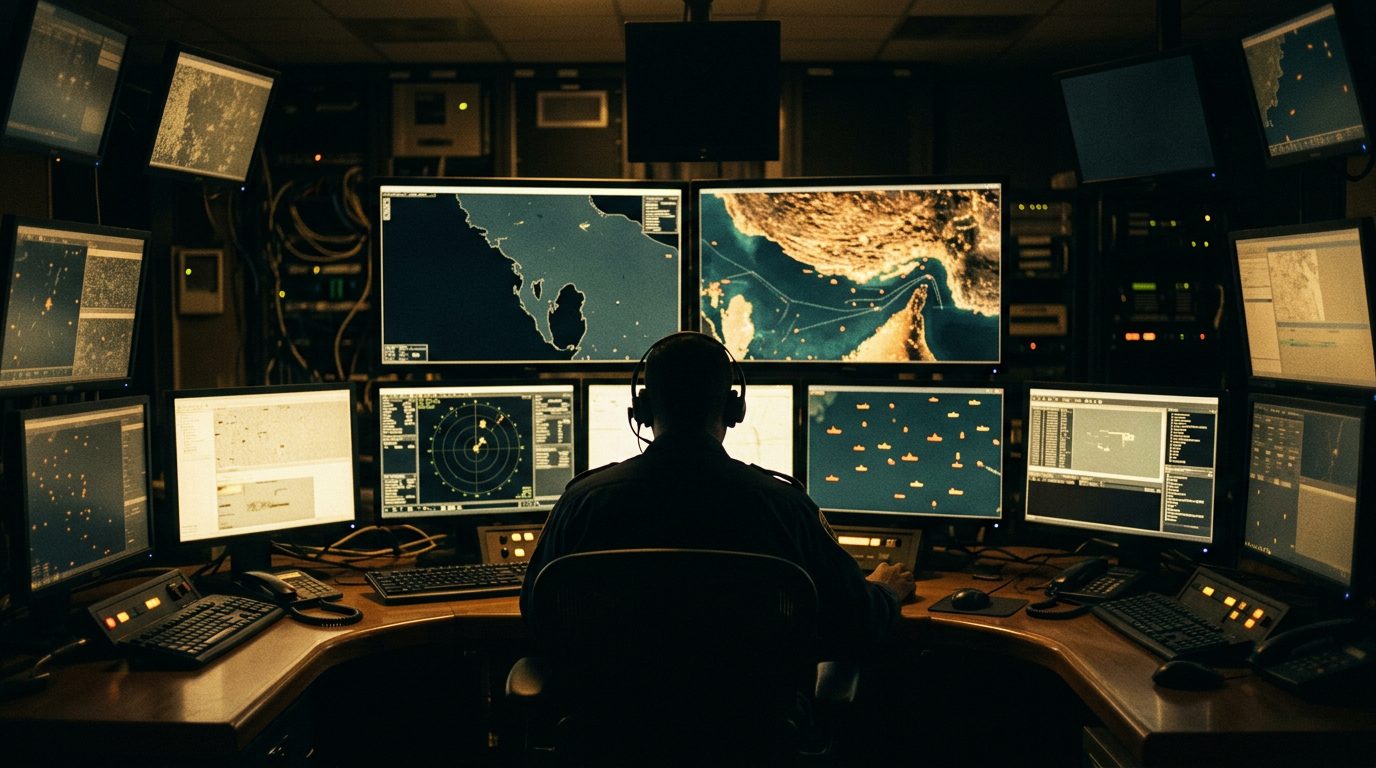
Monday's picture is dominated by the Gulf, with three other fronts worth your attention.
Hormuz, week two. The Strait of Hormuz stays effectively shut. US strikes ran to an eighth consecutive night into 18 July, aimed at degrading Iran's ability to threaten shipping, while Iran struck Gulf-state targets including Kuwaiti bases and desalination plants (Al Jazeera). No large tanker has transited the southern lane with its AIS on since 7 July, per Lloyd's List via Al Jazeera, and the US reimposed its naval blockade on 15 July.
The cost. War-risk cover for a single Gulf voyage now runs at three to ten per cent of hull value, three to ten million dollars on a 100 million dollar tanker against about 250,000 dollars pre-war (The National). Around 6,000 seafarers remain stranded aboard hundreds of vessels, with the IMO advising against all transit (UN News).
World Cup closed. The tournament ended clean at the venue, with Spain beating Argentina one-nil at MetLife on 19 July under a 400-plus-agency operation (CBS News). The real exposure was the breach of the DHS coordination network that tied those agencies together, disclosed at the end of June (Nextgov), not the perimeter.
Martyn's Law. Fresh GOV.UK guidance on 17 July confirms the SIA's regulatory role: standard tier from 200, enhanced from 800, final guidance in autumn 2026, enforcement in spring 2027. Get responsible persons trained now.
Mali. The Bamako siege is hitting the grid. A sabotaged power line cut electricity and water in the capital for two days on 7 July (Africanews), and a joint JNIM and separatist ambush cut up an army convoy near Anefis on 18 July (ABC News).
Haiti. The new Gang Suppression Force stands at roughly 1,000 of a mandated 5,550 and will not reach full strength until October, as the Security Council holds its 90-day review this month (Security Council Report). Displacement is near 1.47 million.
Read the full posts for sourcing and the operator implication on each.