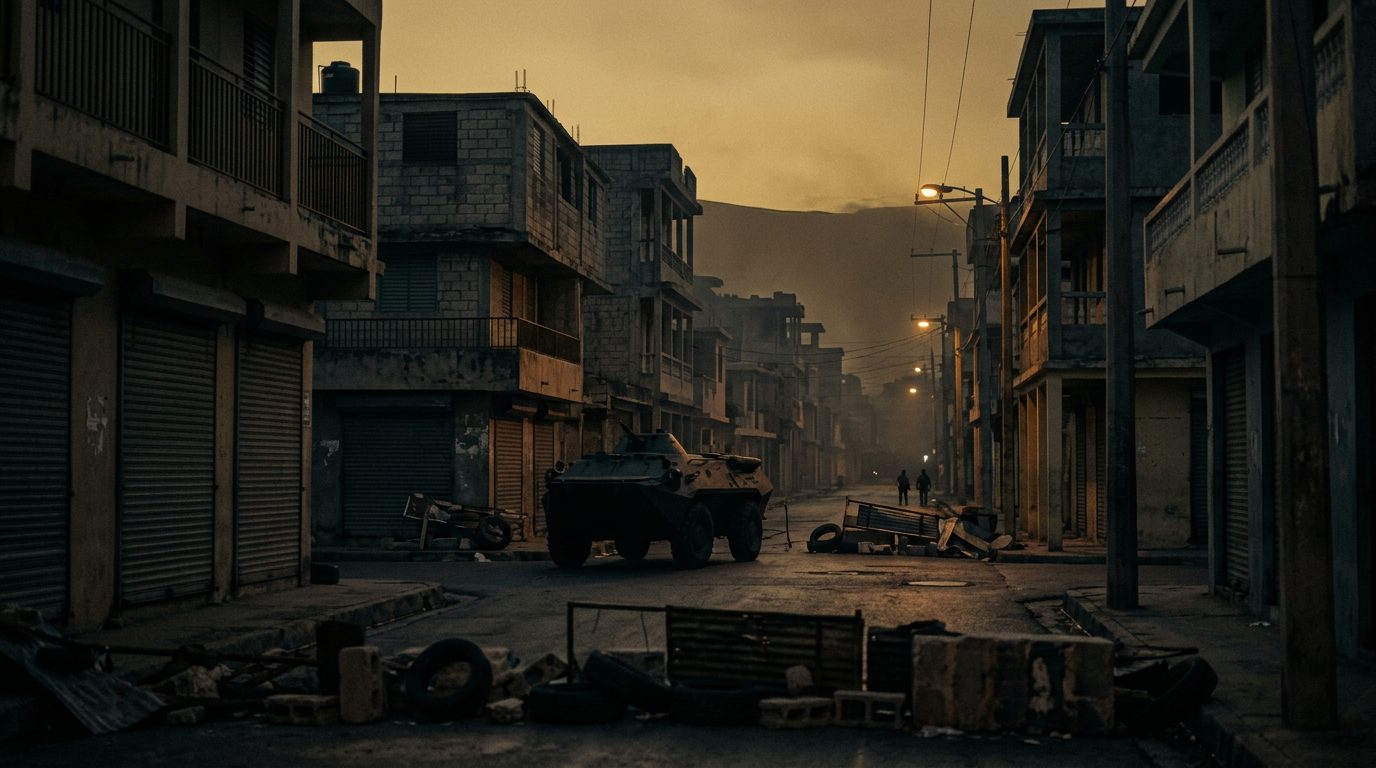
Haiti has an international force fighting its gangs again, but it is early, thin and outmatched for now.
The Gang Suppression Force, authorised by the UN Security Council in September 2025 with a 12-month mandate and a ceiling of 5,550 personnel, has roughly 1,000 on the ground so far. It is not expected to reach full operational capacity until October. Chad and other new contributors are providing troops; Kenyan personnel from the previous Multinational Security Support mission left in April.
The violence it is up against remains extreme. UN figures record 1,642 people killed and 745 injured across Haiti in the first quarter of 2026 alone, with just 27% of those casualties attributed directly to the gangs — a measure of how violent the counter-gang operations themselves have become. Around 1.47 million people are displaced nationwide, more than 300,000 of them in the Port-au-Prince metropolitan area. Gangs continue to control most of the capital. The Security Council is due to take its 90-day briefing on Haiti this month.
For any operator, Port-au-Prince is an extreme-risk environment and should be treated as such. Kidnap for ransom is the standing threat; the airport and main routes are exposed to gang control and sudden closure; and the arrival of the GSF, while significant, does not change the ground picture yet. Movement should be exceptional, hard-planned and backed by a real extraction option. Do not read the new force as a turned corner — it is a force still assembling inside a live emergency.