The JNIM fuel blockade that has been strangling Bamako since September 2025 is holding, and the state's response has hardened into a running logistics battle local media call the fuel war.
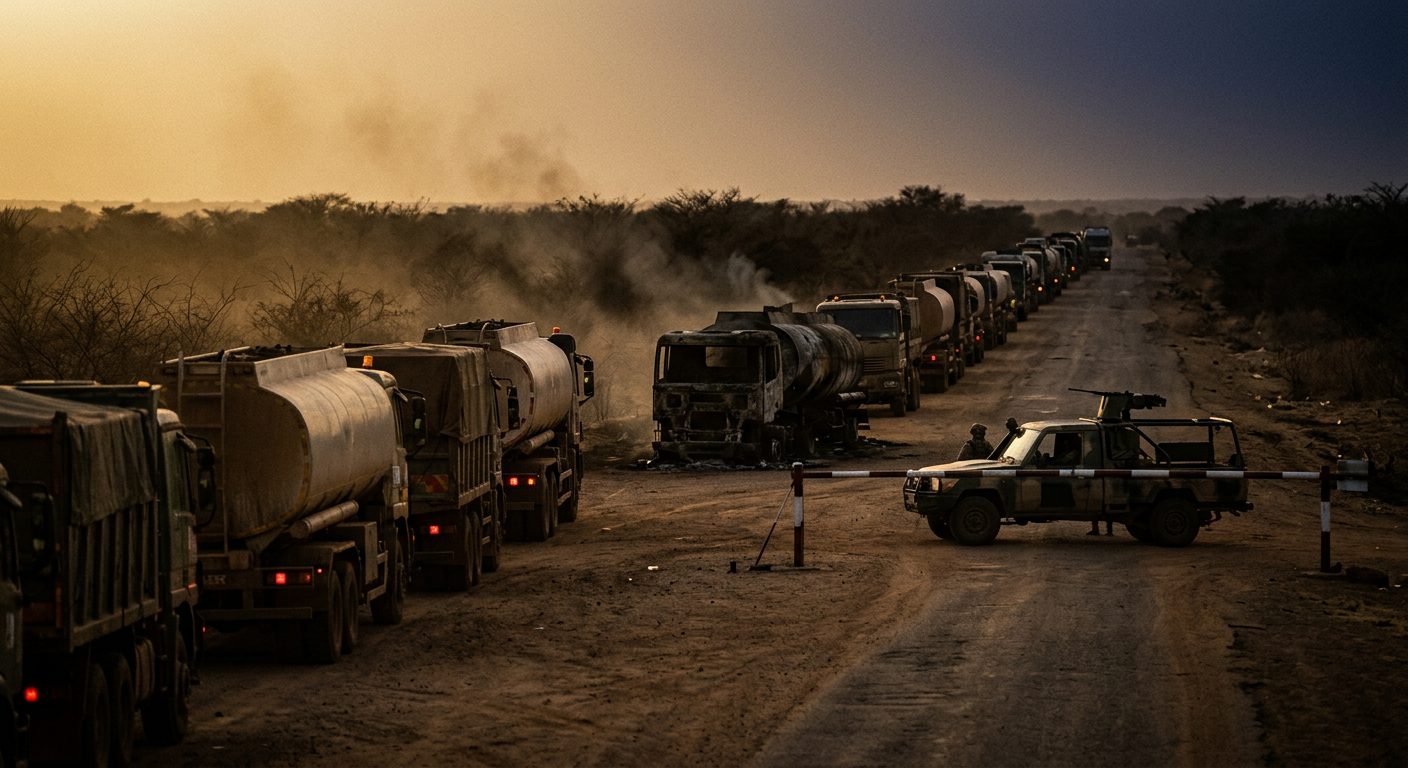
Mali is landlocked and imports roughly 95 percent of its fuel by road from Senegal and Côte d'Ivoire. The al-Qaeda-linked group JNIM has spent the blockade burning tankers on those routes — more than 300 destroyed since it began — and gold-rich Kayes, the critical junction on National Road 1, has been cut off. The junta has named a general to run the fuel effort and pushes fuel through in escorted military convoys, more than a thousand tankers since late October, but the corridor stays contested and lethal: an attack on a fuel convoy near the Senegalese border killed at least 15 people earlier in the year.
Inside Bamako the blockade shows as hours-long queues at filling stations and rationing that steers the little fuel there is to the military and government. Satellite imagery has shown the capital noticeably darker at night.
For operators, Bamako has shifted from a guarded-but-functional hub to a city under siege conditions. Fuel for movement cannot be assumed — stockpile it, and plan routes and timings around convoy availability rather than a normal supply chain. The overland approaches, particularly the Kayes corridor, should be treated as a high-threat environment with an active landmine and ambush risk, not a transit leg. Anyone with people or interests in the capital needs a contingency for a further deterioration, including reduced options to move out by road.