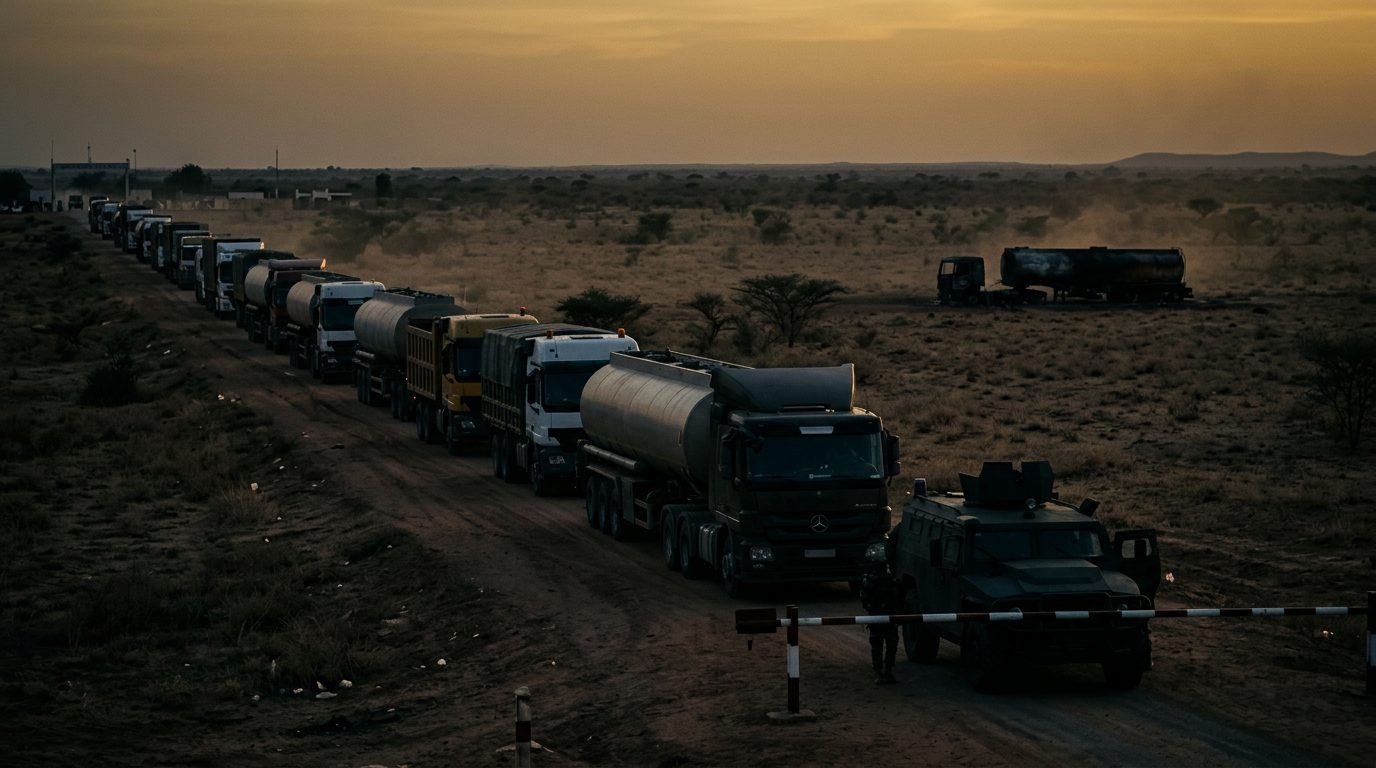
Mali's capital is being strangled without a shot fired inside it. The al-Qaeda-aligned JNIM has kept up a blockade on the fuel roads into Bamako, and open-source reporting counts more than 300 tankers destroyed on the routes in from Senegal and Côte d'Ivoire since the siege began. Mali imports roughly 95 per cent of its fuel by road, so cutting those corridors chokes the country.
The effects are visible: long queues at filling stations, fuel rationed to military and government use, schools and universities closed for stretches, and a capital that goes darker at night as generation drops. The army has taken to escorting fuel into Bamako in guarded convoys, more than 1,000 tankers moved that way since late last year, and the convoys themselves get hit, with one attack near the Senegalese border killing at least 15.
It is now a regional problem. Mali anchors the Alliance of Sahel States with Burkina Faso and Niger, and the disruption is raising costs and risk for haulage firms and traders across the coastal-to-landlocked corridors that feed all three.
For anyone with people, assets or supply lines in Mali or its neighbours, fuel is now the single point of failure. Movement planning has to assume convoy-only resupply, long static periods between fills, and ambush risk on the main arteries, National Route 1 through Kayes above all. Treat any overland task in the region as a logistics problem first and a security problem second, because here they are the same thing.