The al-Qaeda affiliate JNIM's fuel blockade on Bamako has passed a grim milestone: it is no longer a Malian problem alone. The blockade, in place since September 2025, has sharply cut the fuel reaching the capital, leaving long queues at stations and rationing that favours military and government use.
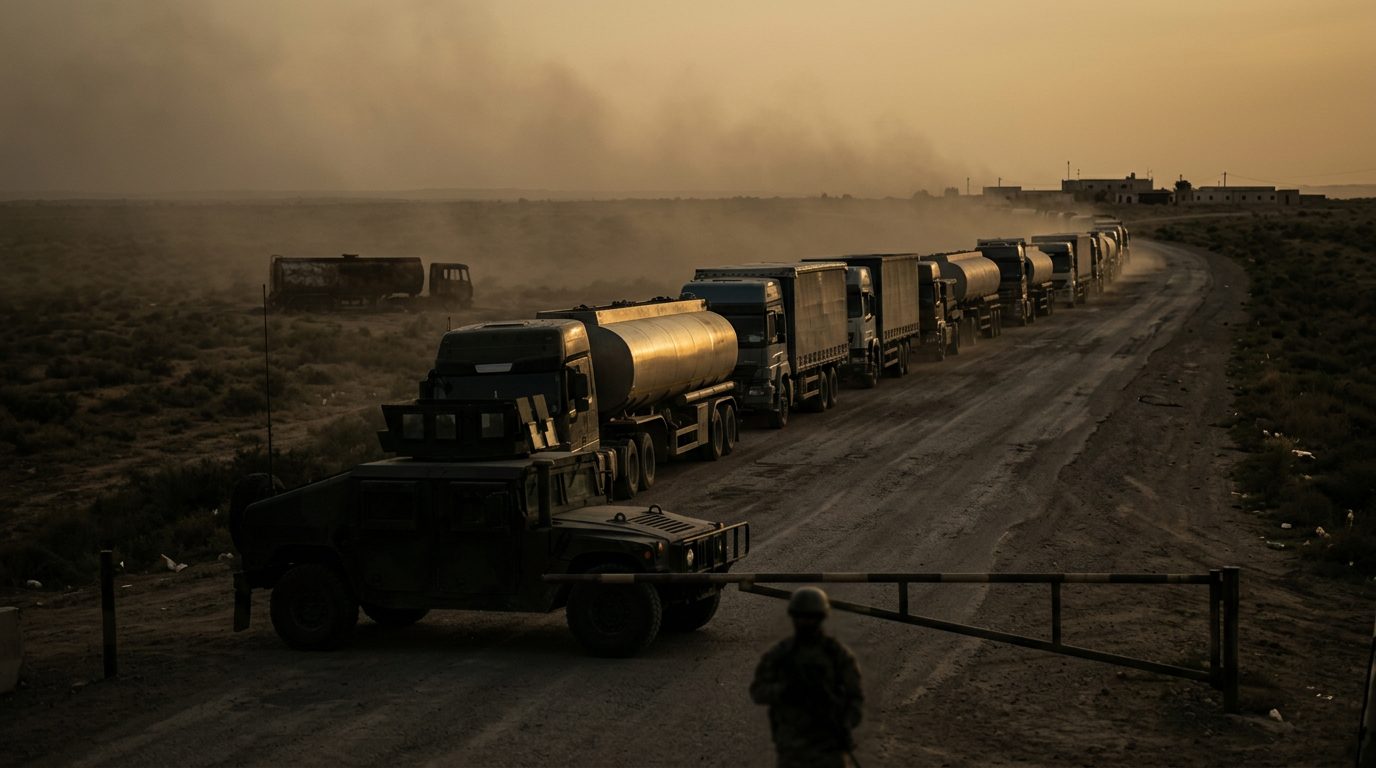
Fuel now moves under guard. Malian forces escorted 940 supply trucks between Kayes and Bamako in the week of 23 to 29 June, a column made up of 540 trucks with a further 400 vehicles that had been stranded near Diema. Convoy escorting on that scale tells you how contested the arteries into the capital have become.
The wider cost is landing on the region. Landlocked Mali brings in nearly all its fuel and much of its trade by road through neighbouring ports. Open-source figures put Mali's 2024 imports at around 1.67 billion dollars from Cote d'Ivoire and 1.3 billion from Senegal, and Mali accounted for more than a quarter of the exports handled by Senegal's Port of Dakar. Dakar has reported losses of about 2.6 million dollars a month over the September to November 2025 period. JNIM's stated aim is exactly this, paralysing national commerce by hitting the convoys rather than the city.
For any operator with people, assets or supply chains in Mali or the wider Sahel, the planning baseline is a capital that can go short of fuel and power at short notice, movement that depends on military escorts, and knock-on disruption reaching into Senegal, Cote d'Ivoire and the coastal trade routes.